We Built a Recipe Site for a Real Grandma on Free Hosting. She Broke It in 9 Days.
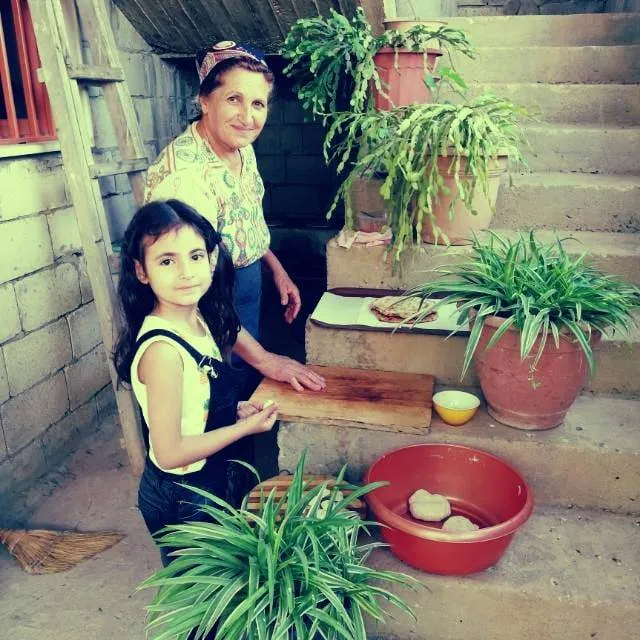
Photo: Opui42, CC BY-SA 4.0, via Wikimedia Commons
We write about free hosting for a living, and we've got a confession: almost everything we publish assumes you, the reader, speak fluent developer. We talk about cold starts, cron jobs, and bandwidth caps like everyone knows what those are.
But a huge chunk of the people who actually need free hosting don't know any of that. They're the church newsletter lady. The guy selling honey at the farmers market. The grandma who wants to put her sourdough cinnamon roll recipe online because "the grandkids keep losing the index card."
So we ran an experiment. We built a complete recipe blog — recipes, a photo gallery, a contact form — on 100% free hosting tiers, then handed it to a genuinely non-technical user to run for a month. Her name is Carol. She's 68, she's a retired school cafeteria manager from Ohio, and she is exactly who the free tier economy forgot.
The Stack We Built (All $0, All the Time)
We kept it boring on purpose. A static site generator outputting plain HTML, hosted on a free static host with a generous bandwidth allowance. Images compressed and stored on a free image host with a CDN. The contact form wired to a free form-backend service — no server code needed. A free subdomain to start, since we weren't about to ask Carol to buy a domain before she'd even typed her first recipe.
Total cost: zero. Total deploy complexity for the initial build: ours, not hers. That's the key trick — we set everything up so Carol's only job was adding new recipes.
For the first week, that worked beautifully. Carol typed up her pickle recipe, uploaded a photo, and hit publish. She was thrilled. She emailed the link to her sister in Florida.
Day 9: The First Casualty
Then Carol wanted to fix a typo. "Add the nutmeg," she said. "I forgot the nutmeg."
Here's the thing about most free static hosting setups: there's no edit button. To change a recipe, someone has to regenerate the site and redeploy it. For us, that's a two-minute task. For Carol, "redeploy" might as well have been "rebuild the carburetor."
She tried. We gave her a one-page cheat sheet with screenshots. She got 80% of the way through, hit a Git push error she had no way to understand, and did what any reasonable person does: she gave up and emailed us the corrected recipe with the subject line "CAN YOU FIX??"
This is the finding that matters most from our whole month: free hosting is free, but maintenance is a skill. We reviewed the setup docs for the major free static hosts and static site generators, and not one of them has a real answer for the non-technical maintainer. The docs all assume a terminal.
What Actually Broke Over 30 Days
We kept a log. Here's the damage report:
- The contact form silently ate two messages. Carol never knew. We only caught it because her pastor mentioned he'd emailed and she hadn't replied. The free form backend had a submission limit we'd blown past after a local news blurb sent a small traffic spike. No warning email reached the inbox Carol actually checks.
- The photo gallery broke on the church iPad. An older Safari browser on a hand-me-down tablet choked on the image format we'd picked for compression. Carol's response was to declare the site "broken" — to her, one broken page is the whole site.
- The free subdomain confused everyone. Multiple family members thought the site was a scam because the URL looked "weird." Carol eventually asked us to "get the real one," and we spent $12 on a domain. So much for the zero-dollar experiment — though to be fair, that's the one purchase we'd recommend to anyone.
- Nothing crashed. Genuinely. Traffic peaked around 400 visits on the day the newsletter went out, and the free static host didn't blink. Bandwidth was a non-issue at this scale.
The Verdict, Both Ways
If you're evaluating free hosting for yourself and you can read a terminal, the technical results were a green light. A static recipe site is the perfect free-tier workload: light, cacheable, and forgiving. The uptime was flawless. The speed was fine. The $0 bill stayed at $0 (plus one domain).
But if the person maintaining the site isn't you — if it's a parent, a client, a small nonprofit volunteer — the calculus flips. The limits that matter aren't bandwidth or storage. They're the edit button that doesn't exist and the error message that might as well be in Latin.
Our recommendation after a month of Carol: free hosting is a great home for a non-developer's site only if a developer stays in the loop for maintenance. If Carol needs to be fully independent, the better play is a free plan from a website builder with a visual editor — less nerdy, less flexible, but she can fix the nutmeg herself.
Free hosting reviews, ours included, grade on a developer curve. Carol's month taught us the other half of the scorecard: what happens when the person holding the site has never heard the word "deploy" — and never wants to.